

What generates Ganymede’s magnetic field?
When Galileo flew past Ganymede in 1996, its instruments found something no spacecraft had measured at another moon: an internally generated magnetic field. That discovery made the largest moon of Jupiter a place to investigate both a metallic core and a buried ocean.
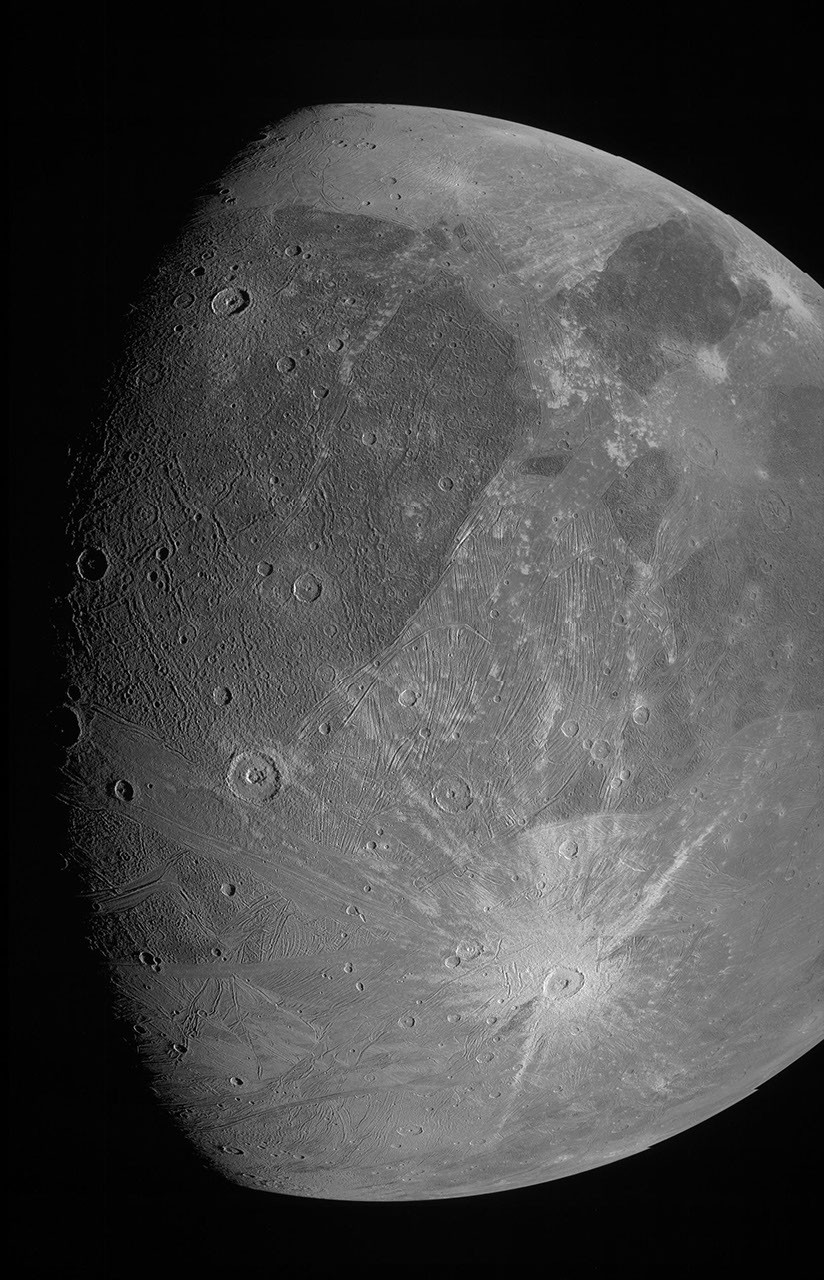
Begin beneath the ice
Ganymede is larger in diameter than Mercury, but its mixture of rock and ice makes it much less massive. Its outer appearance also conceals a differentiated interior: a metallic core, a rocky mantle and an extensive outer region containing ice and potentially liquid water. [1] [2]
A magnetic field generated inside a body requires more than a large supply of iron. The material must be electrically conducting and moving in a way that sustains electric currents. Scientists interpret Ganymede’s intrinsic field as evidence of a dynamo associated with its metallic interior. A cold, motionless iron object would not provide the same explanation. [1] [2]
That makes the field an interior measurement. Galileo could not photograph the core, but the shape and strength of the magnetic signal revealed a physical process operating far below the visible ground. [1] [2]
A magnetosphere inside another magnetosphere
Ganymede also orbits inside Jupiter’s much larger magnetic environment. The field measured near the moon therefore contains several contributions: Jupiter’s field, Ganymede’s internally generated field and the response of conducting material within the moon. [1] [3]
Charged particles moving along magnetic field lines can excite gases near the poles, producing auroras. On Ganymede, ultraviolet observations reveal glowing bands associated with those magnetic connections. The bands change position as the surrounding Jovian field changes. [1] [3]
Separating the magnetic contributions matters. An intrinsic field provides information about the deep interior; an induced response can reveal an electrically conducting layer elsewhere. Treating every magnetic signal as evidence for the same process would miss the distinction that makes Ganymede useful. [1] [3]
Use moving light to test for buried water
A salty ocean conducts electricity. When the external magnetic field varies, currents in such an ocean generate a magnetic response that partly opposes the change. The ocean can therefore alter how far the auroral bands rock back and forth. [3]
Hubble observations reported in 2015 measured a smaller movement than expected for the comparison model without an ocean. The researchers found that a buried saltwater layer could account for the reduced motion. This was evidence derived from a physical response, rather than a direct view of liquid water. [3]
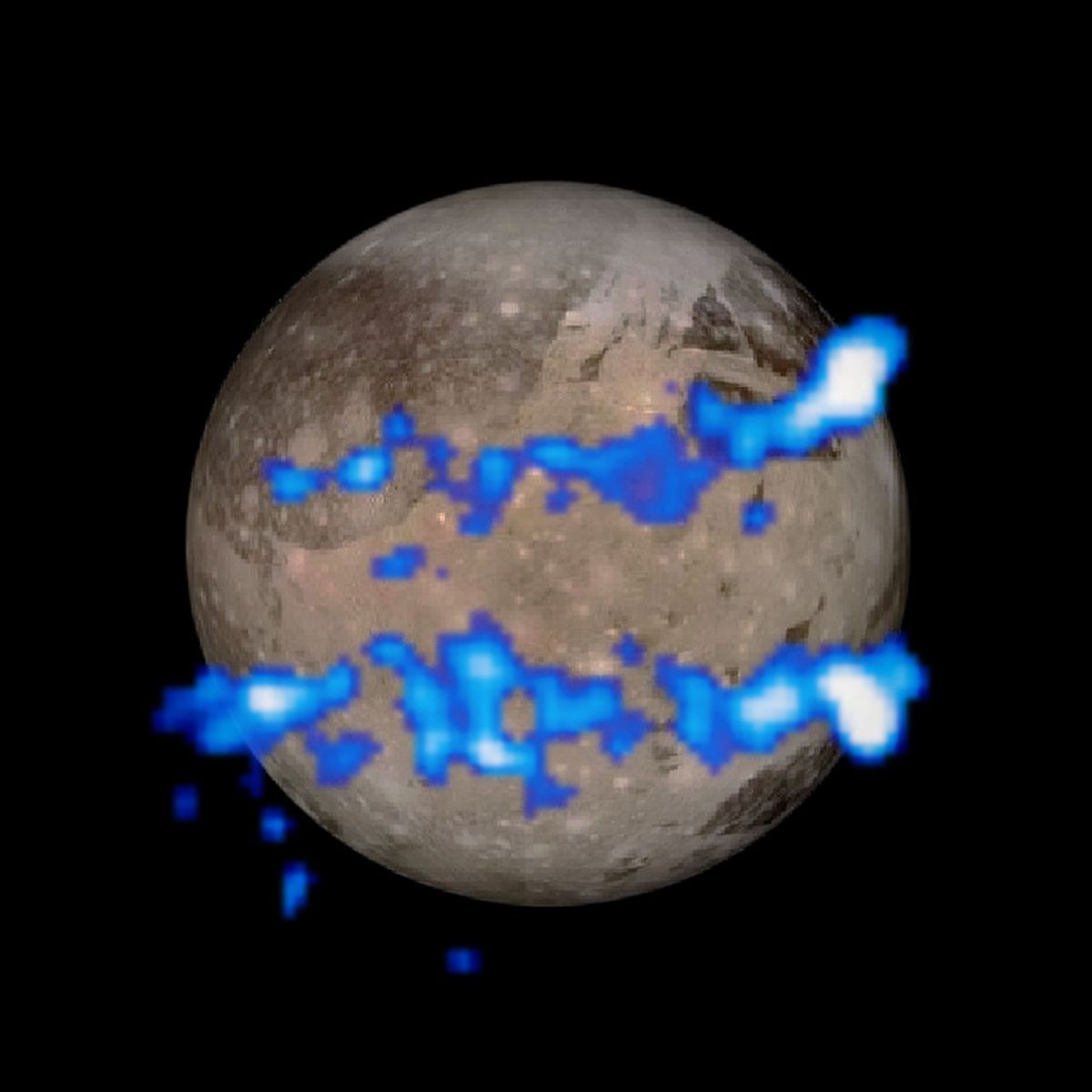
The method depends on models of the field, the conducting layer and the surrounding environment. Its value comes from connecting an observable change in light to a testable property of material hidden under ice. [3]
The surface records a different part of the history
Spacecraft photographs show dark, heavily cratered regions crossed by younger-looking bright terrain with long grooves and ridges. Those boundaries record how the outer crust changed after some of the older impacts had already occurred. [1]
Grooved terrain suggests that the icy shell experienced stress and deformation. It cannot by itself specify the ocean’s current depth or prove that water reaches the surface today. Geological images and magnetic observations answer different questions, and their interpretations have to fit one interior history. [1]
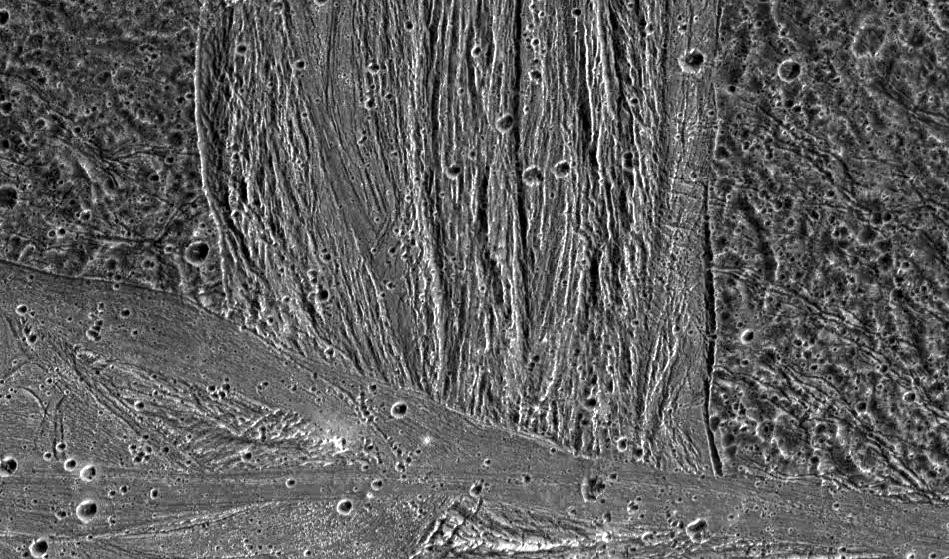
Juno’s June 2021 flyby supplied a newer close view of these terrains. Comparing it with Galileo’s record helps researchers examine surface composition and geological relationships while retaining the earlier magnetic measurements. [1]
What a dedicated survey can separate
ESA’s Juice mission is designed to investigate Ganymede using magnetic and plasma measurements alongside radar, gravity and surface observations. Combining those methods can reduce the ambiguities that remain when a single kind of signal is used alone. [2] [1]
Gravity constrains how mass is distributed. Radar can investigate parts of the ice shell. Magnetic measurements test conducting layers and the dynamo, while cameras establish the geological setting. Together they can distinguish the moon’s metallic engine from the possible ocean above it—the two hidden systems that make Ganymede’s magnetic field much more than a compass curiosity. [2] [1]
Sources & image credits
Related reading and objects
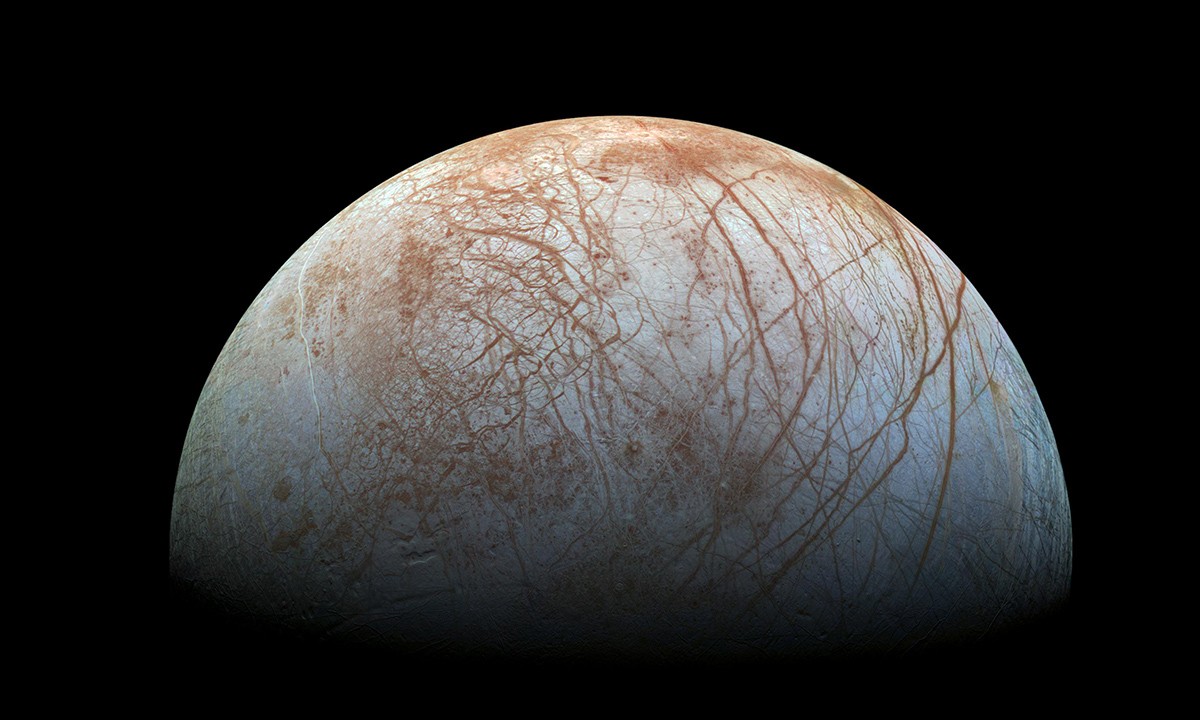
How we investigate Europa’s hidden ocean
Europa Clipper is travelling towards Jupiter to investigate whether Europa has environments that could support life. The target lies largely beneath ice. Its investigation starts with a magnetic response that Galileo measured and a fractured surface that cameras can see.
Reading Earth’s magnetic field from orbit
ESA launched three Swarm satellites to measure a field made mostly thousands of kilometres beneath our feet. Their instruments also detect magnetised rocks, currents in space and even moving seawater. To understand Earth’s magnetic field, they must separate those signals.