

What keeps Io’s volcanoes erupting?
Voyager 1 revealed an erupting plume on Io in 1979. Juno later returned close enough to measure how this small rocky moon deforms and loses heat. The energy driving its volcanoes comes from an orbit continually disturbed by Jupiter and neighbouring moons.
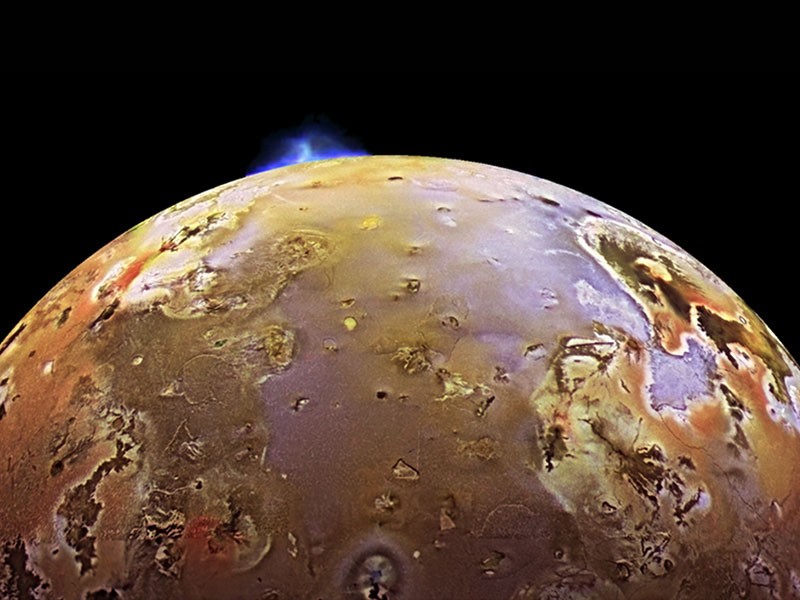
A changing shape turns orbital energy into heat
Io circles Jupiter in about 42.5 hours. Its orbit is slightly elliptical, so the strength and geometry of the tidal pull change along the way. Different parts of the moon experience different gravitational forces, repeatedly deforming the rocky body. [1] [2]
Rock does not respond perfectly elastically. Some of the mechanical energy involved in that deformation becomes heat. This tidal dissipation supplies the power that keeps Io exceptionally active, even though a small moon would otherwise have difficulty retaining enough original heat to sustain such widespread volcanism. [1] [2]
Europa and Ganymede help maintain the orbital arrangement through gravitational resonances. Without the continuing orbital interactions, tides would tend to reduce the eccentricity that makes the repeated forcing effective. Io’s volcanoes therefore connect the behaviour of molten rock with the motion of several moons. [1] [2]
Eruptions keep rewriting the visible ground
Lava flows and volcanic deposits cover older terrain, continually modifying the surface. Sulfur-bearing material contributes to the vivid colours in many images, while the very hot lava and colder surrounding crust produce strong differences in infrared emission. [1] [3]
A visible camera records landforms and reflected light. An infrared instrument can identify active hot regions that may occupy only a small fraction of an image. Comparing the observations connects the shape of a depression or flow with the heat it is currently releasing. [1] [3]
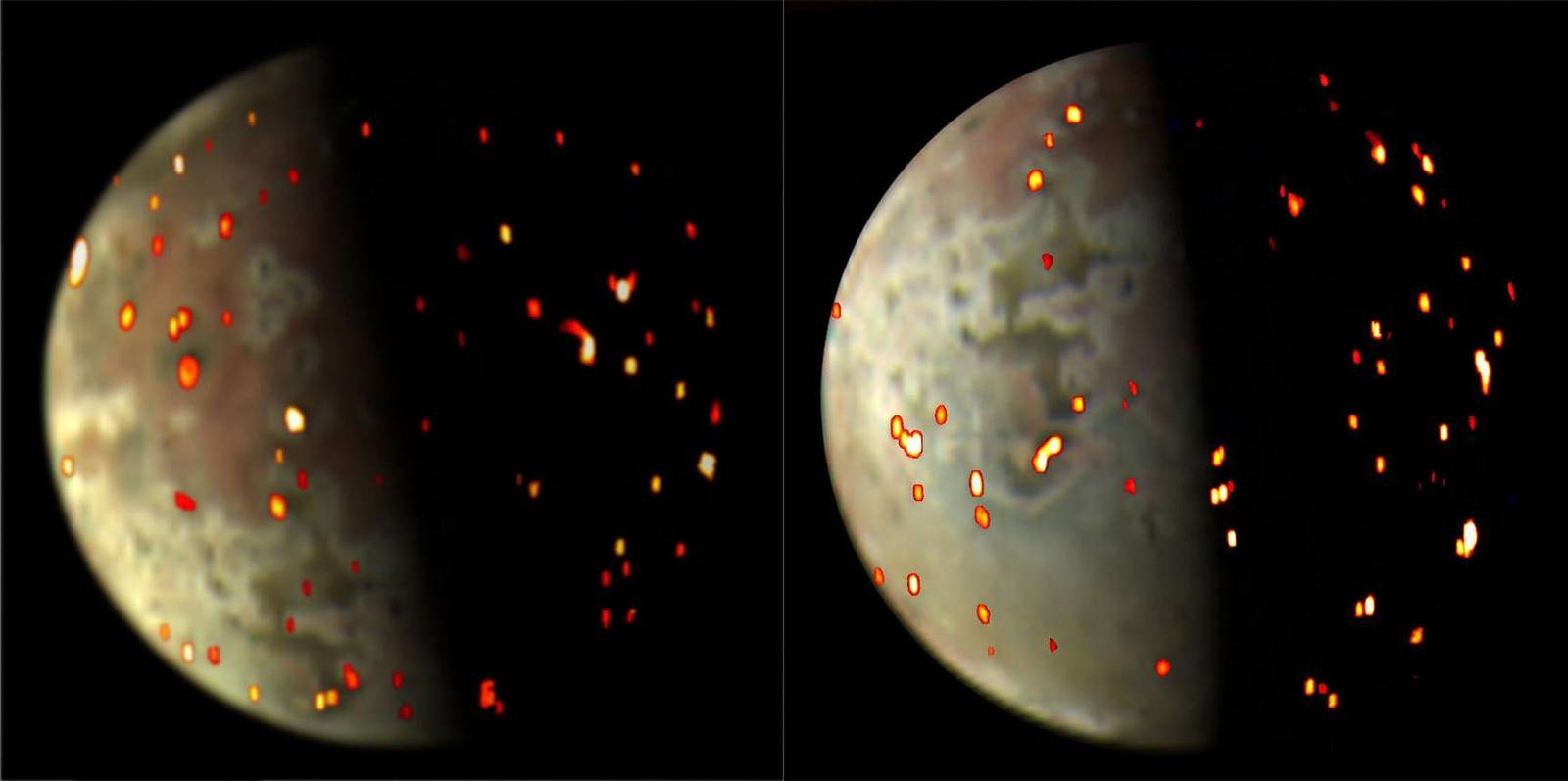
Juno’s JIRAM instrument investigated many lava lakes during close flybys in 2023 and 2024. Observations reported in 2024 supported a common pattern of a crusted lake surface bordered by hotter material. The arrangement gives information about how magma moves and how a cool surface can conceal continuing activity below it. [1] [3]
Does all that lava share one shallow ocean?
A global layer of molten material would change how readily Io deforms under Jupiter’s tides. That offers a test of its interior which does not depend on seeing magma through the crust. Juno’s close encounters allowed precise radio tracking of the spacecraft’s acceleration in Io’s gravity field. [2]
A study reported in December 2024 compared the new tracking data with earlier spacecraft and ground observations. The measured tidal deformation was consistent with the absence of a shallow global magma ocean, favouring more localised magma reservoirs feeding the volcanoes. [2]
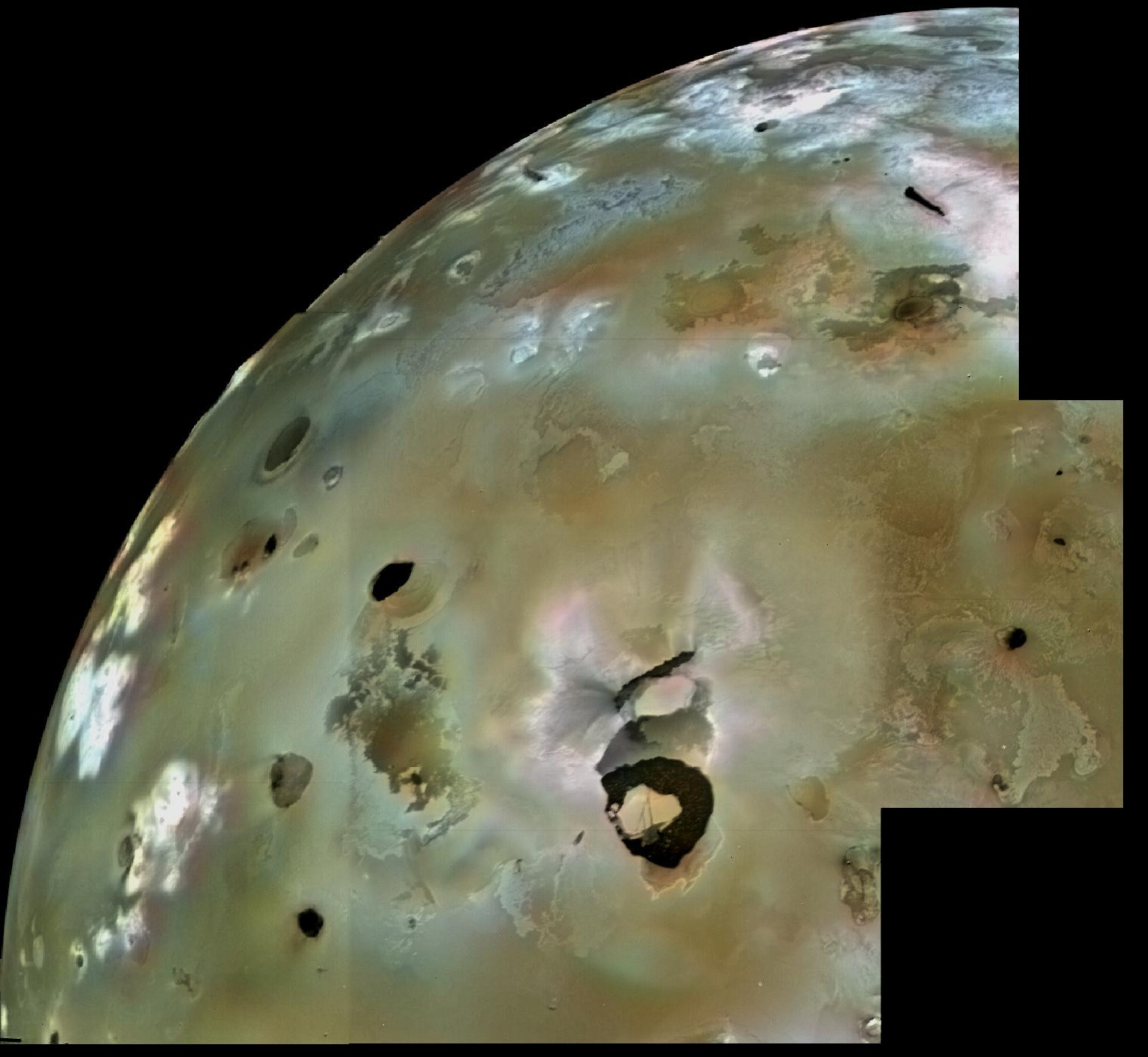
The distinction is about the distribution of melt, not the reality of the eruptions. Io can generate intense volcanic activity without every vent drawing from one continuous shallow sea of magma. Interior models have to reproduce both the observed activity and the measured response to gravity. [2]
Microwaves add a view below the cool skin
Results reported in July 2026 used Juno’s microwave radiometer to investigate temperatures beneath Io’s surface. Different wavelengths sample different depths. The measurements revealed a steep increase in temperature below the outermost material, adding information that infrared observations of the top surface could not provide alone. [4]
Researchers considered two possible explanations for the signal: heat conducted upwards through the crust, or cooling lava flows beneath a solidified covering. Those interpretations connect the observations to different ways of storing and releasing shallow heat. The signal constrains the alternatives rather than providing a complete map of every magma chamber. [4]
Follow the energy from the orbit to an eruption
The full explanation runs through several scales. Orbital interactions sustain changing tides. Deformation dissipates energy within the moon. Magma accumulates and moves through the crust, and eruptions transfer heat and material to the surface and into plumes. [1] [3] [2]
That chain explains why an image of a bright plume is only the visible end of Io’s activity. Cameras and infrared instruments observe what escapes, while gravity and microwave measurements investigate what supports it below. Taken together, they show how the gravitational architecture around Jupiter powers a continually changing rocky world. [1] [3] [2]
Sources & image credits
Related reading and objects
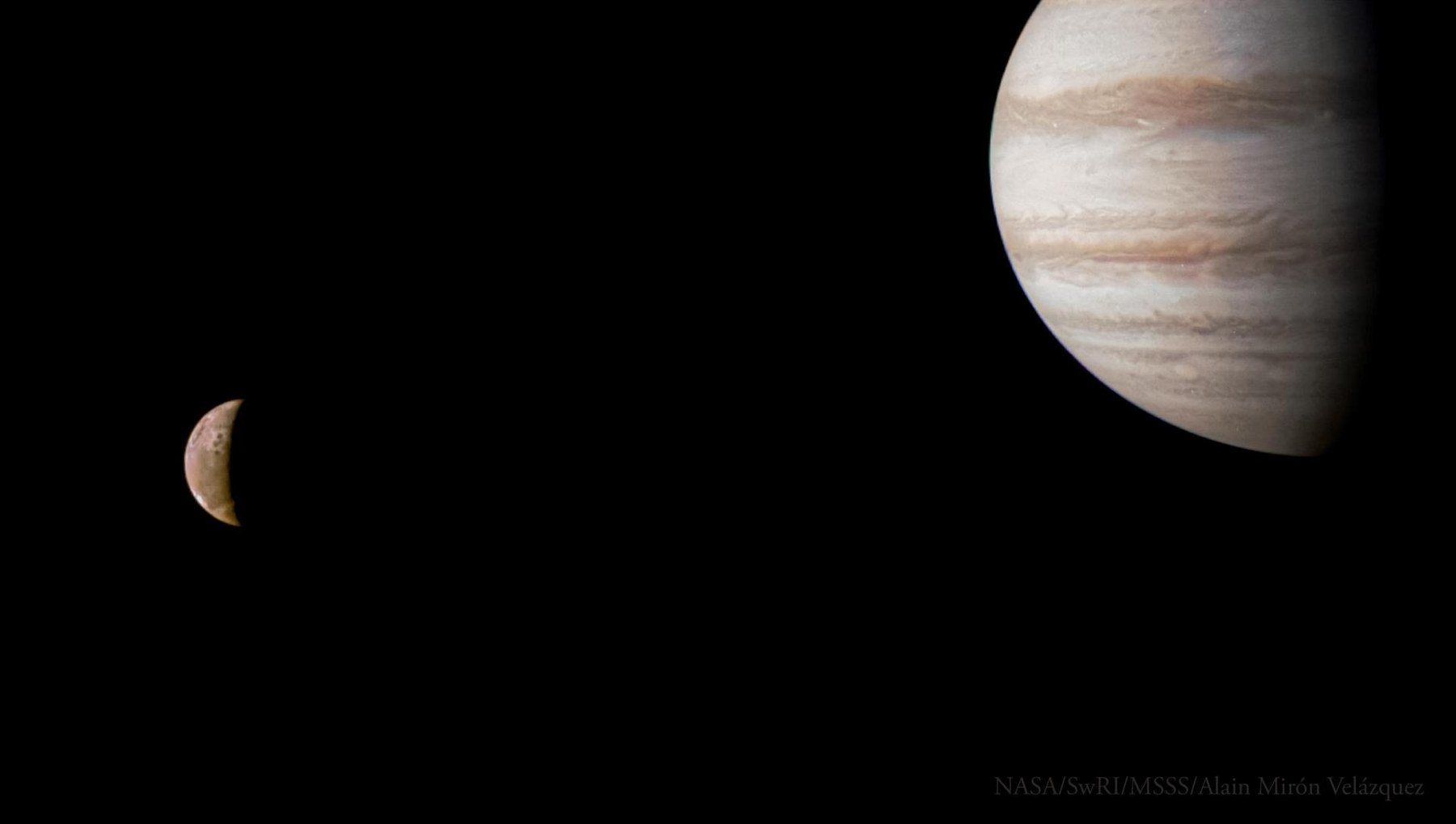
Why Jupiter must be explored with its moons
Juno’s close observations and Galileo’s earlier tour show why a mission to Jupiter is also a mission through a system of moons, rings and charged particles. Each moon follows a different geological history inside the same gravitational and magnetic environment.
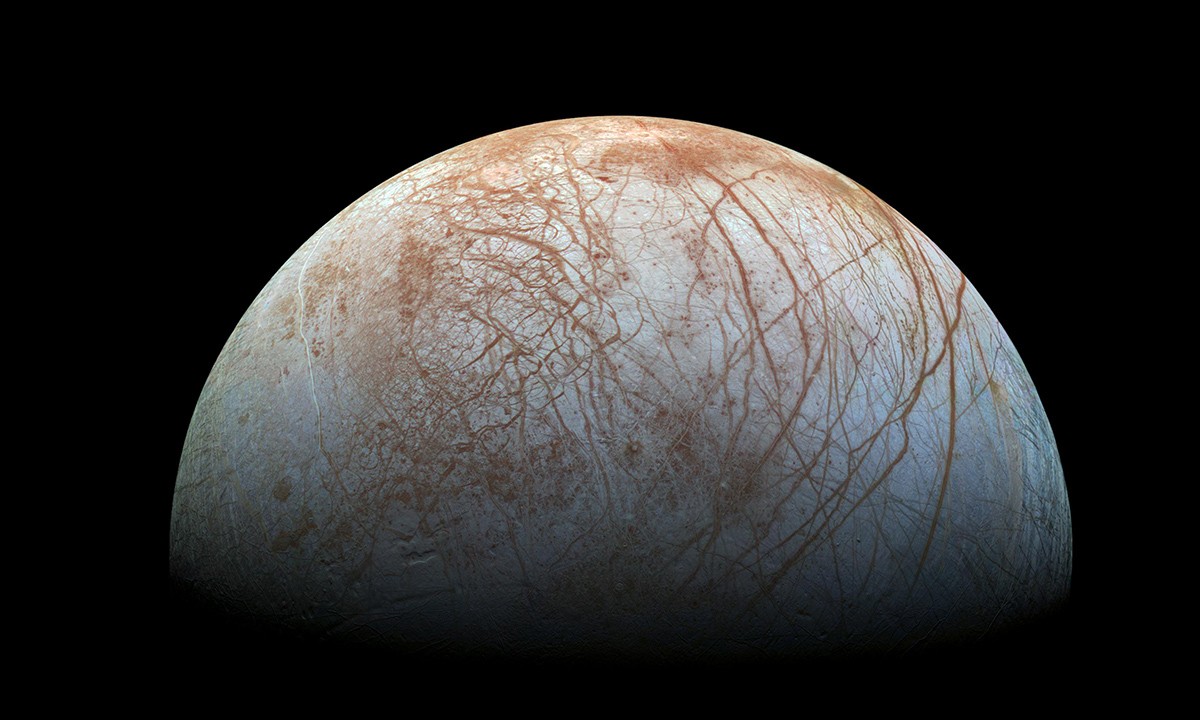
How we investigate Europa’s hidden ocean
Europa Clipper is travelling towards Jupiter to investigate whether Europa has environments that could support life. The target lies largely beneath ice. Its investigation starts with a magnetic response that Galileo measured and a fractured surface that cameras can see.