

Why Jupiter must be explored with its moons
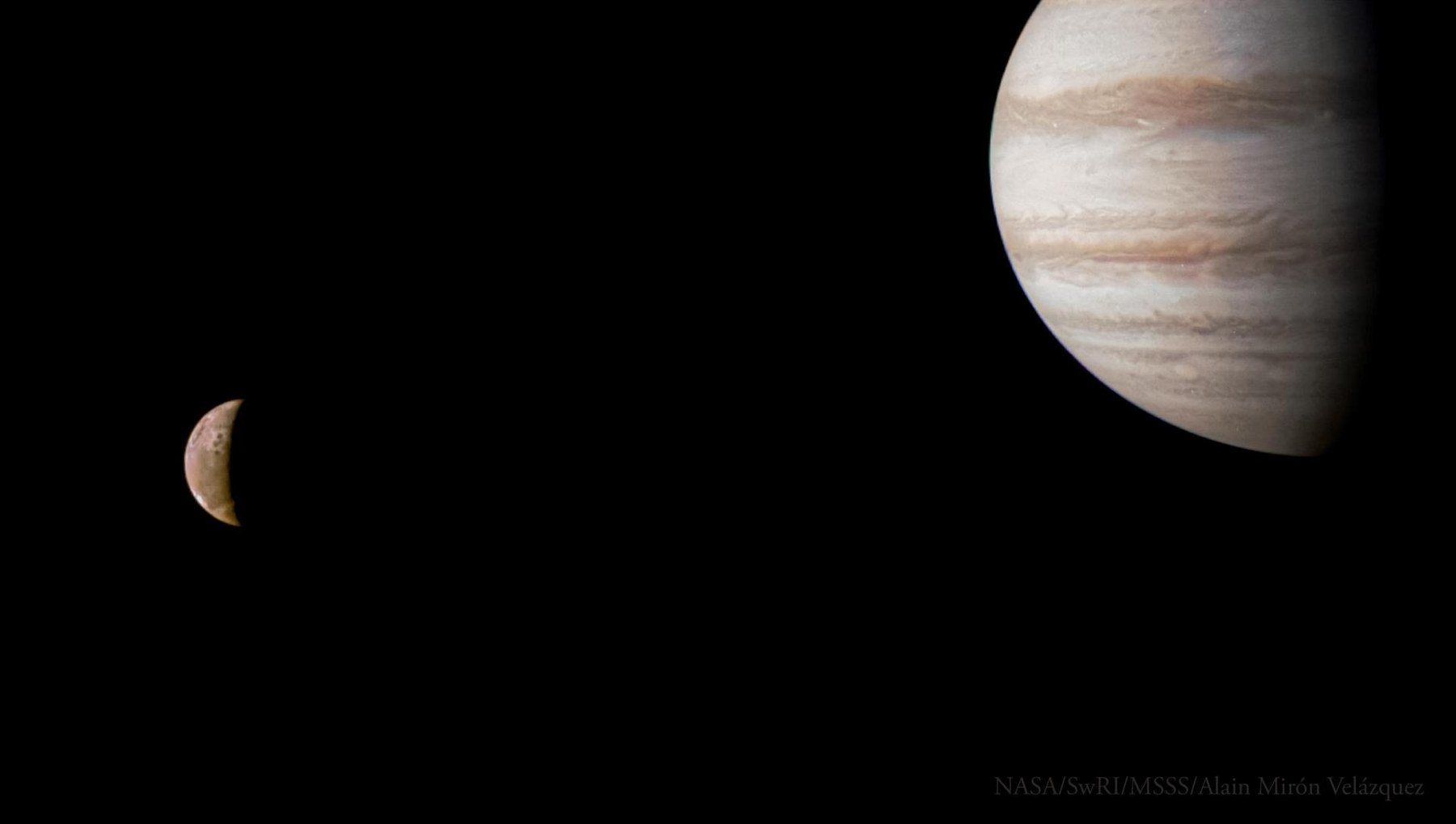
Juno’s close observations and Galileo’s earlier tour show why a mission to Jupiter is also a mission through a system of moons, rings and charged particles. Each moon follows a different geological history inside the same gravitational and magnetic environment.
Orbits supply a source of energy
Io is extraordinarily volcanic. Its orbit and interactions with neighbouring moons maintain tidal deformation as Jupiter’s gravity pulls on it. Repeated flexing dissipates energy inside the moon. The relevant energy source is therefore connected to orbital motion, rather than sunlight alone. [1]
Io’s neighbours do not respond identically. Europa’s icy exterior and evidence for an underlying ocean present a different problem from Io’s exposed volcanic terrain. Composition, internal structure and orbital history all influence the result. Calling the moons small planets is a useful size comparison, but it misses the continuing exchanges within their shared system. [1]
The space between the moons matters
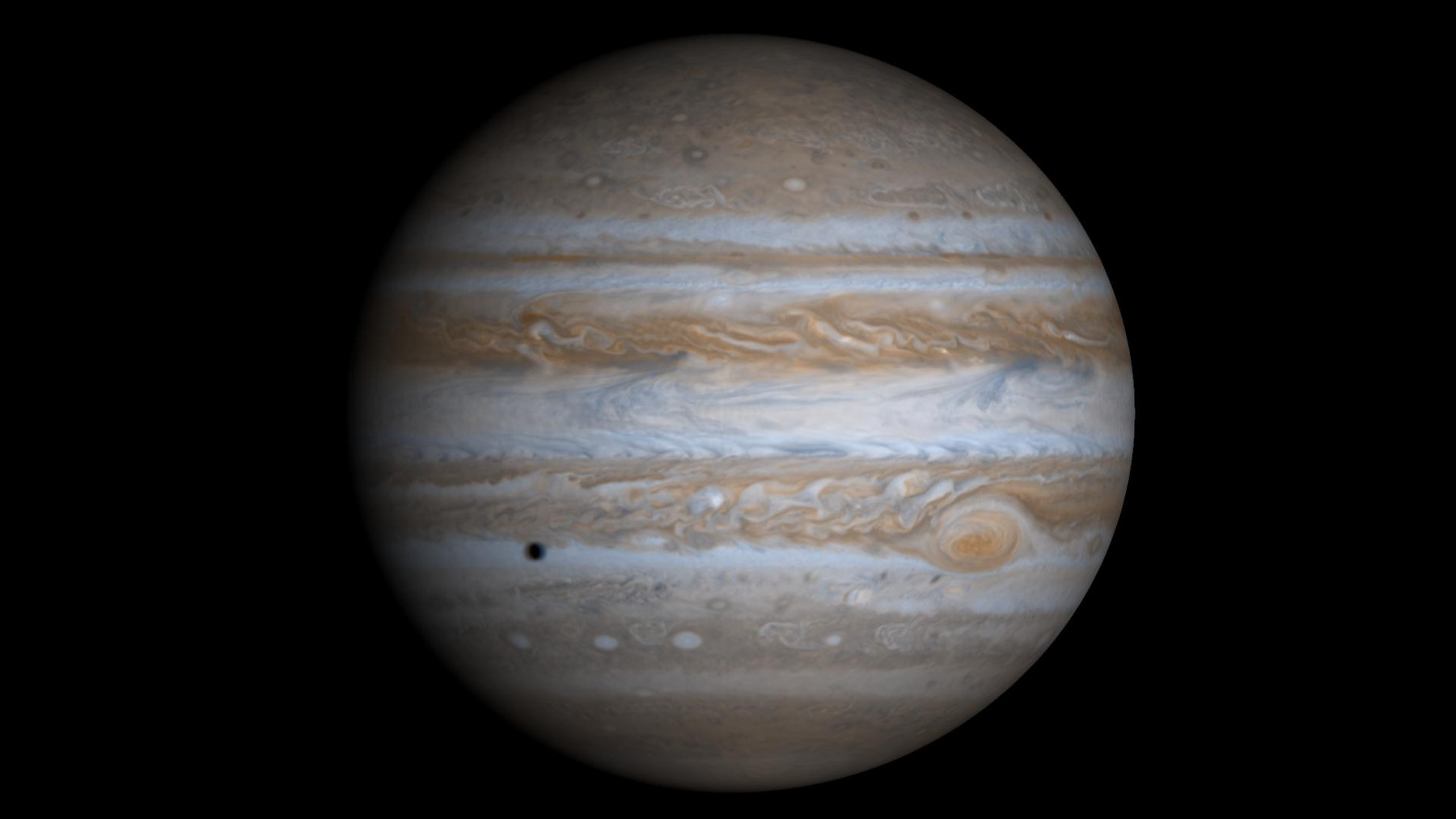
Jupiter’s magnetic field traps and accelerates charged particles, creating an intense radiation environment. It affects moon surfaces and the design of spacecraft that pass nearby. A mission’s trajectory must balance scientific access with the accumulated radiation dose its instruments and electronics can tolerate. [2] [3]
The environment also creates observations of its own. Auroras show energy entering the upper atmosphere, while particles and fields trace interactions between the planet and its surroundings. A bright patch on a moon may consequently record both its geology and the processing of its surface by radiation. The setting cannot be separated from the object. [2] [3]
A flyby and an orbiter answer different questions
A close flyby can supply detailed images and a brief local sample of particles, fields or gravity. An extended tour adds repeated encounters, varied viewing geometry and time coverage. Galileo’s orbital mission and Juno’s evolving orbit provide different combinations of those measurements. Their observations are complementary rather than interchangeable. [4] [1]
Europa Clipper and ESA’s Juice have distinct investigations within the same system. Their target moons, instruments and orbital plans determine what they can measure. A launch record establishes how the spacecraft left Earth; the scientific programme explains why it follows one route through the moons rather than another. [4] [1]
Compare the moons by their evidence
Start with the surface observations: volcanic deposits, fractures, craters, colour and topography. Then ask which subsurface structures and energy sources can explain them. An inferred ocean is a scientific conclusion drawn from measurements and models. It is not established simply because an artist has drawn blue water underneath ice. [1] [4]
The complete satellite catalog and the Jupiter-system view let you follow these relationships beyond the four large Galilean moons. Keep the scale and evidence appropriate to each body. A small irregular moon may have an accurately measured orbit but little resolved imagery; that absence is part of what is known, not a reason to substitute an invented landscape. [1] [4]
Sources & image credits
Related reading and objects
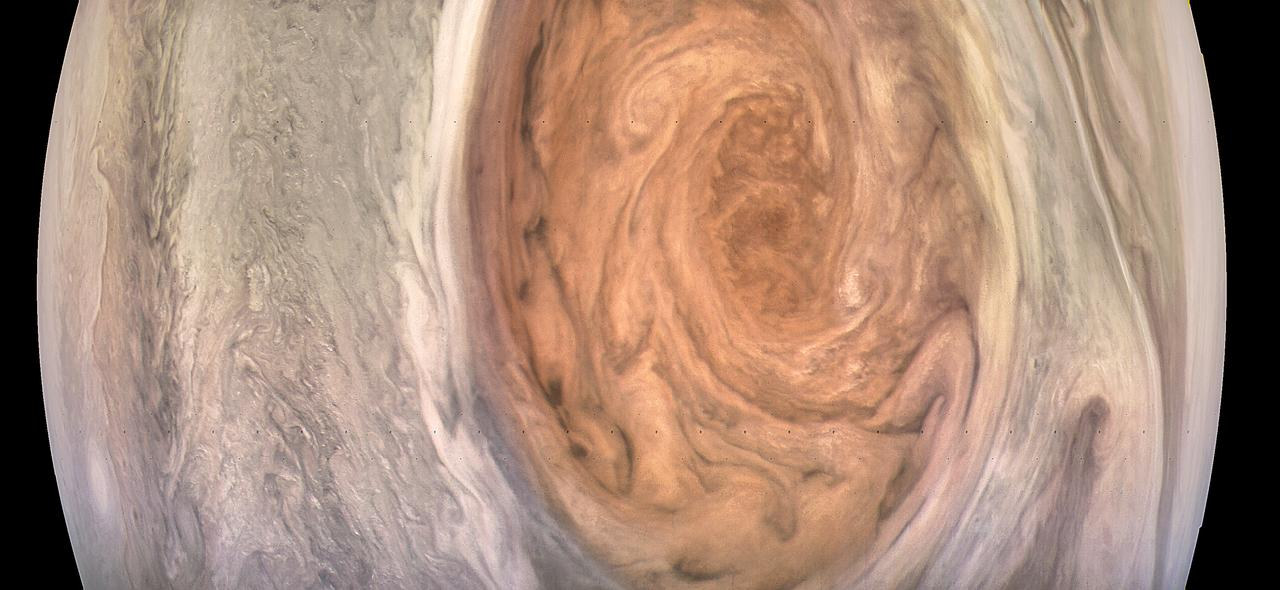
How deep does Jupiter’s Great Red Spot go?
Juno flew over a storm whose outline has been watched for generations. Its cameras could show the top. To measure what lay beneath, the mission needed microwaves, a radio link to Earth and two different ways of investigating hidden atmosphere.
How Juno weighs Jupiter’s hidden interior
Juno’s investigation of Jupiter’s interior begins with measurements made outside it. The spacecraft’s changing motion and magnetic environment constrain what lies beneath the clouds, where pressures prevent any conventional lander from surviving.