

What Enceladus’s plumes reveal about its ocean
Cassini discovered that Enceladus sends water vapour and icy grains into space. Flying through that material gave scientists access to a buried ocean without landing on the moon or drilling through its frozen shell.
A small moon puts material within reach
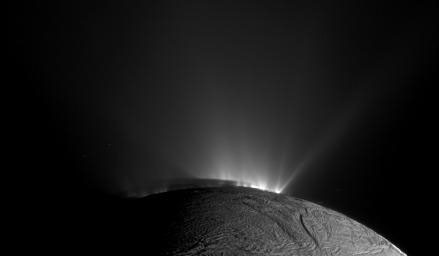
Enceladus is only about 500 kilometres across. Much of its surface is intensely reflective and cold, yet fractures near its south pole release jets of water vapour and ice. Cassini’s discoveries from 2005 onward established that this small moon was actively transferring material from its interior into space. [1]
Some escaping particles spread around Saturn to supply the diffuse E ring. Others can fall back onto Enceladus. The plume connects an icy surface, a buried liquid reservoir and the surrounding Saturn system. It also creates an unusual sampling opportunity: a spacecraft can encounter material that originated below the surface while remaining outside the moon. [1]
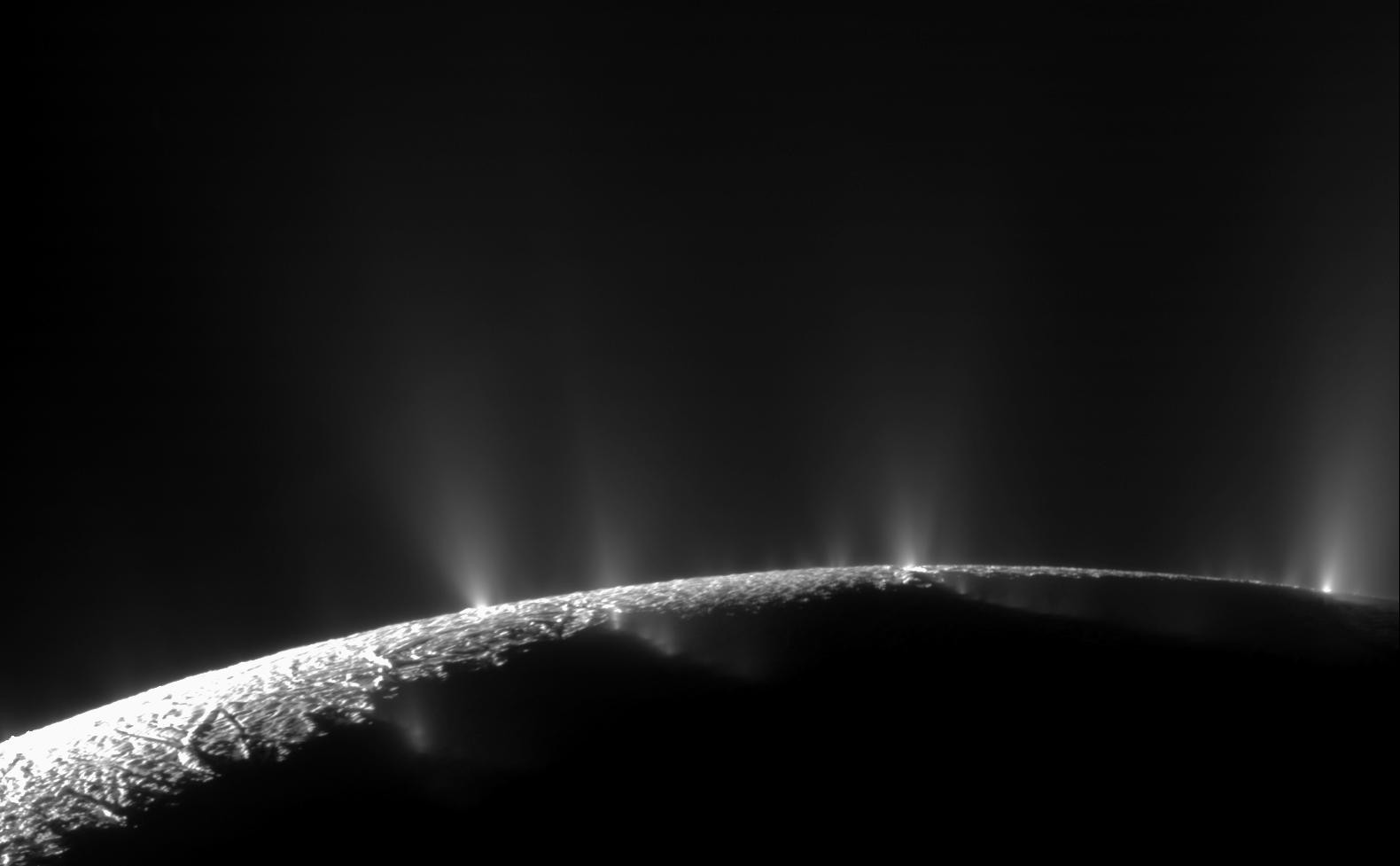
Several lines of evidence, including the composition of the particles and the moon’s response to gravity, support a subsurface ocean. The accessible grains then address a more detailed question than whether water is present: what is dissolved in that water, and what chemical processes occur around it? [1]
The sample strikes the instrument at high speed
Cassini’s Cosmic Dust Analyzer did not collect an intact bottle of seawater. Ice grains hit its target at high speed, vaporising and producing charged particles. A mass spectrometer analysed the resulting ions. Their patterns allowed scientists to investigate salts and organic material carried by the grains. [2]
A plume encounter in 2008 supplied the data for an analysis reported in 2025. The grains were sampled only about 21 kilometres above the surface, shortly after ejection. Earlier studies had often examined particles that had already spent much longer in Saturn’s E ring. [2]
That age difference is scientifically useful. Radiation and other processes in space can change a particle’s chemistry. Finding diverse organic compounds in freshly ejected grains showed that the earlier organic detections could not all be explained by years of processing after the material left Enceladus. The ocean and the route from it were already supplying chemically complex material. [2]
A phosphate signature adds a missing ingredient
A separate analysis reported in 2023 identified phosphorus salts in salt-rich ice grains. Phosphorus is used in terrestrial biology, including genetic material, cell membranes and energy-carrying molecules. Its detection expanded the evidence for the ocean’s chemical ingredients. [3]
The measurement concerns compounds carried by particles, not a photograph of the seafloor. Researchers compared the mass-spectrometer signals with laboratory measurements and chemical models to interpret the phosphate signature. The relationship between the grains and their source water is part of that inference. [3]
Salts are also evidence about the liquid environment from which a grain formed. Their presence connects the escaping ice to dissolved material and to interactions within the interior. Each additional compound helps constrain an ocean that cannot yet be sampled directly at depth. [3]
An ocean needs more than ingredients
Liquid water and carbon-bearing molecules make an environment interesting, but organisms also require usable energy. Chemical reactions can provide that energy where sunlight never reaches, particularly when material with different chemical properties is brought together. [4] [1]
A 2023 reanalysis of Cassini data strongly supported hydrogen cyanide in the plume and found evidence for a more varied chemical network than had previously been identified. Such results help researchers investigate both the production of complex compounds and possible energy sources within the ocean. [4] [1]
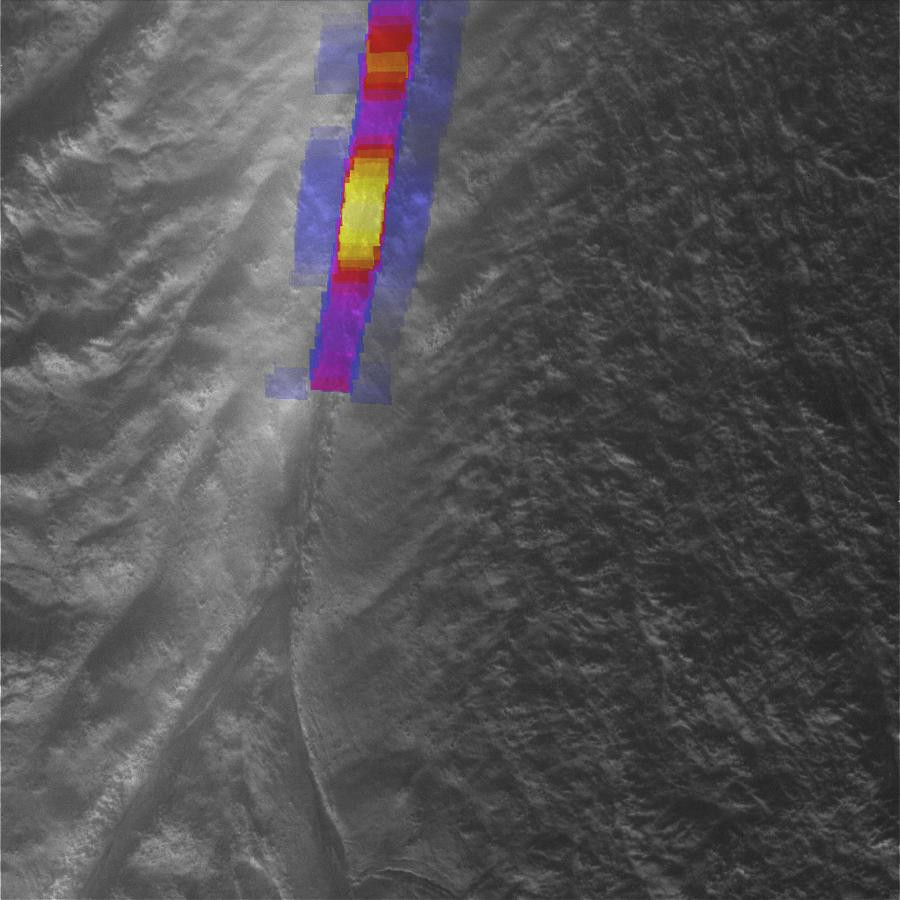
Hydrothermal interactions between water and rock are one important part of the interior picture. They can move heat and chemical ingredients into the water. Establishing which processes operate, and at what rates, requires the combined evidence from gas, ice grains, gravity and the moon’s heat output. [4] [1]
Chemistry opens the next question
None of these compounds establishes that Enceladus contains life. The observations establish a water-rich, chemically active environment with ingredients and potential energy sources relevant to habitability. A biological interpretation would require evidence capable of distinguishing living processes from nonbiological chemistry. [2] [3] [4]
Cassini ended its mission in 2017, but its measurements continue to yield new results. The plume is the reason those data remain so valuable: it carries parts of a hidden environment into reach. Reading its grains and gases together turns a distant white moon into an ocean whose chemistry can be tested. [2] [3] [4]
Sources & image credits
Related reading and objects
How Cassini found worlds beyond Saturn’s clouds
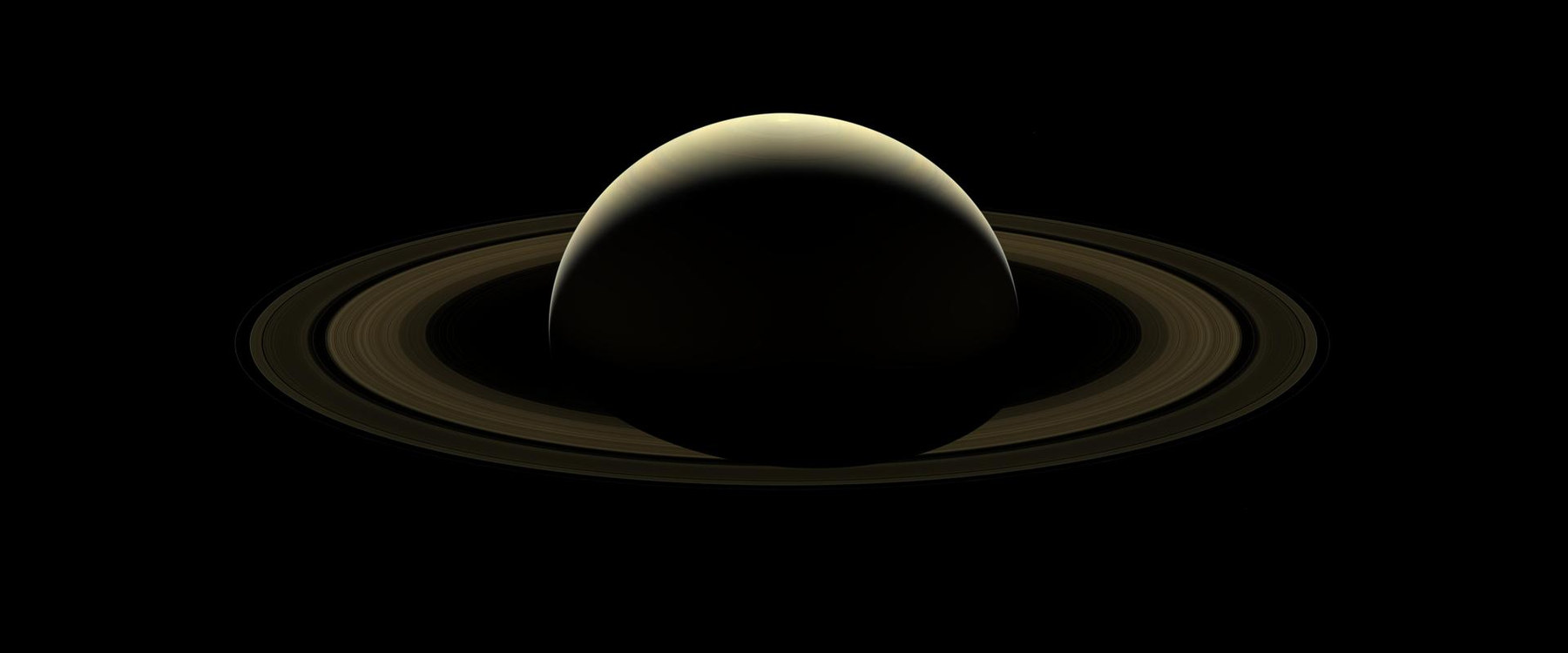
Cassini–Huygens travelled to Saturn as an orbiter and a Titan entry probe. Their investigation reached beyond the planet’s clouds: jets from Enceladus and lakes on Titan showed how different two neighbouring moons could be.
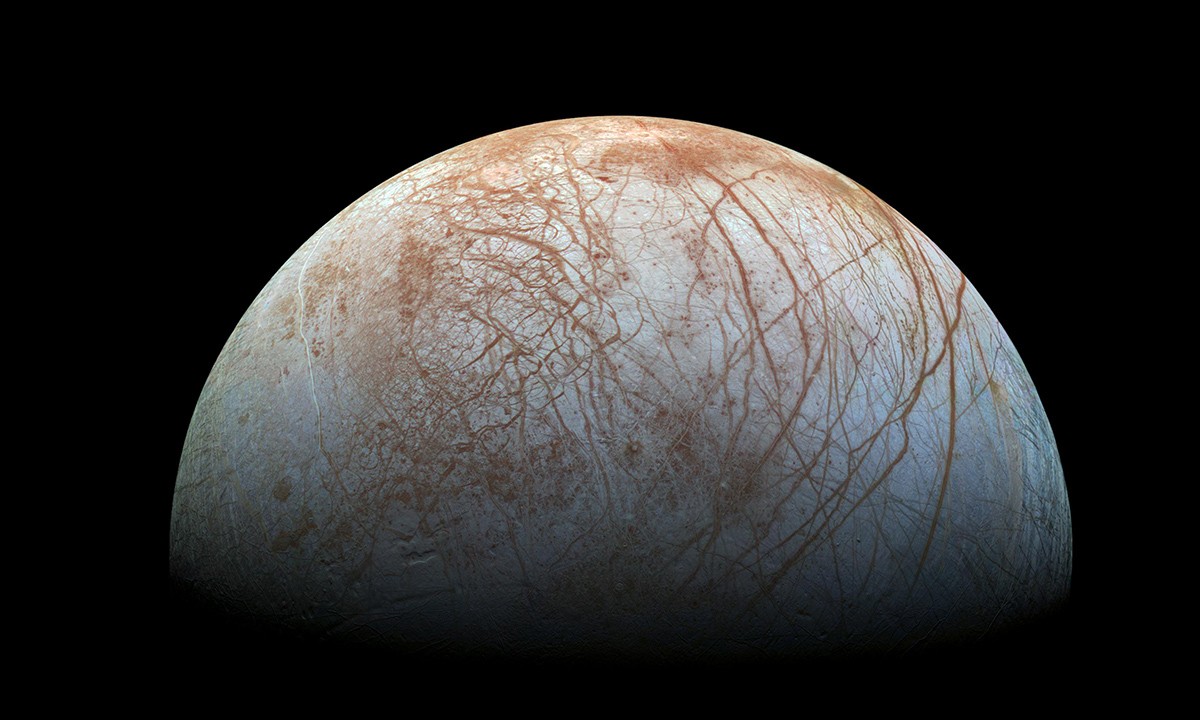
How we investigate Europa’s hidden ocean
Europa Clipper is travelling towards Jupiter to investigate whether Europa has environments that could support life. The target lies largely beneath ice. Its investigation starts with a magnetic response that Galileo measured and a fractured surface that cameras can see.
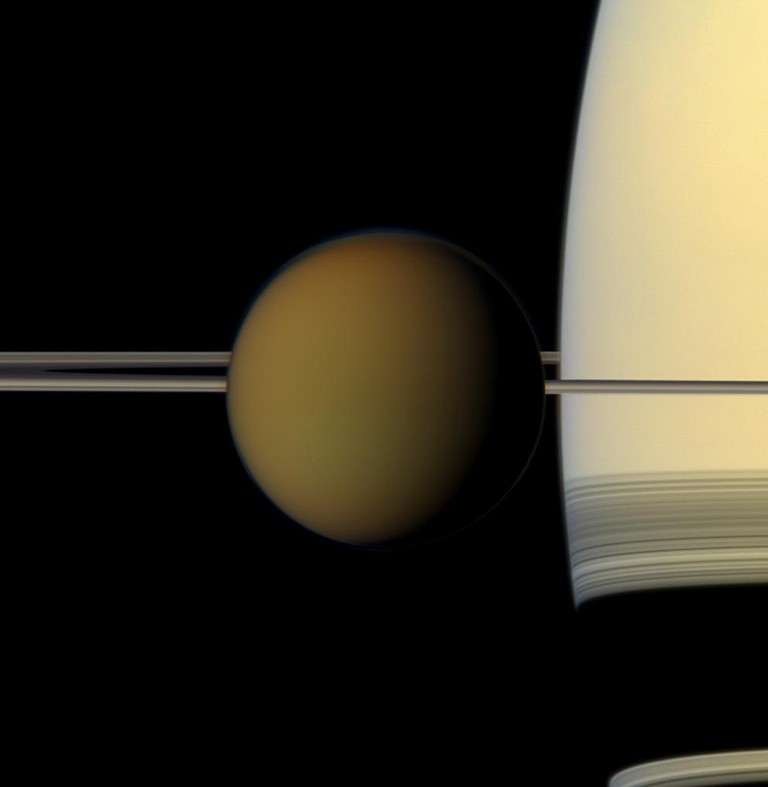
Rain, rivers and ice on Titan
Dragonfly is planned to investigate Titan’s surface chemistry by flying between locations. Cassini and Huygens established the setting: rain, channels and lakes on a moon so cold that water ice acts as bedrock and hydrocarbons supply the liquid weather.