

Why does a rocket launch look like a jellyfish?
A launch can put its exhaust back into sunlight while you stand in darkness. Follow the lighting, the expanding gas and the evidence that links a strange cloud to a real mission.
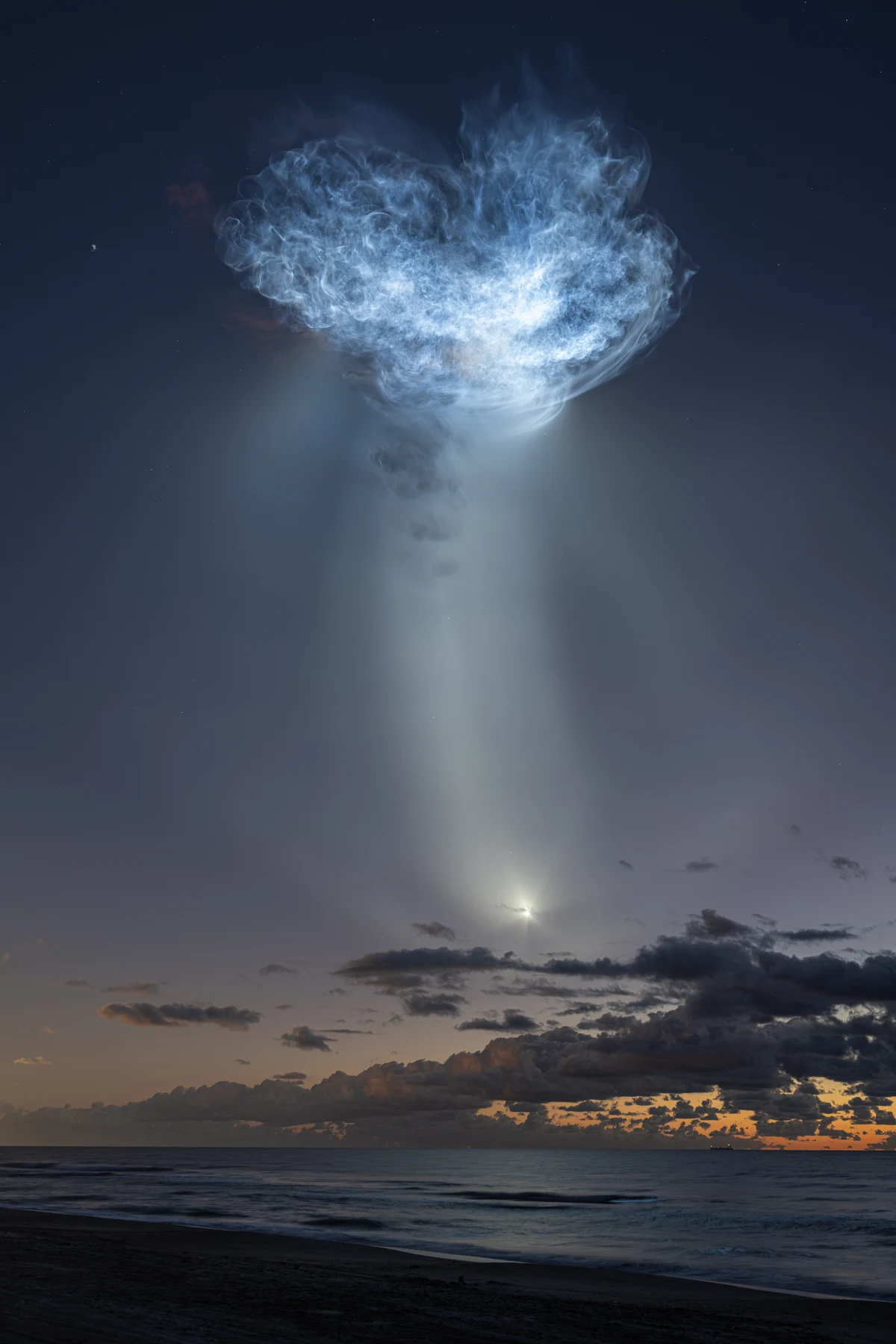
Sunset happens at different heights
USSF-317 is a Falcon 9 mission listed from Vandenberg in Spacian’s launch schedule. If you are planning to watch a launch like it, the target time is only the first clue. A rocket can climb into sunlight after the ground below has entered darkness. Whether you get that view depends on the actual flight time, trajectory and your location. [6]
The photograph above shows the effect during NASA’s CRS-35 launch on 13 October 2026. A broad pale plume hangs over a darker sky and sea. NASA identifies sunlight illuminating the exhaust as the reason for this launch “jellyfish”. [1]
Imagine watching the Sun disappear behind a hill. Climbing the hill can bring it back into view. On a much larger scale, Earth’s curvature lets a high plume see the Sun while an observer at the surface cannot. Sunrise gives the same arrangement in reverse.
A darker sky requires a higher sunlit plume
For a point directly above an observer on a spherical Earth, the height needed to reach sunlight grows as the Sun drops farther below the horizon. The simple tangent geometry gives height = Earth radius × [1/cos(Sun depression) − 1]. Using a 6,371-kilometre radius gives the following thresholds.
How high is the edge of the shadow?
Original geometry for a point directly overhead on a spherical Earth with a 6,371 km radius.
| Sun below your horizon | Height to reach sunlight |
|---|---|
| 6° | 35.1 km |
| 12° | 142.3 km |
| 18° | 327.9 km |
The rapid increase explains why a launch shortly after sunset has different lighting opportunities from one deep in the night. A distant plume has its own local Sun angle, so your clock and these overhead examples alone cannot predict its visibility.
Why the plume becomes so wide
The rocket exhaust has already expanded and accelerated through the nozzle before it reaches the sky. NASA’s nozzle explanation connects that expansion to falling gas pressure and increasing supersonic speed. As the vehicle climbs, the surrounding atmosphere also becomes much less dense. The expanding exhaust is no longer confined by the same outside pressure as it was near the pad. [4]
That large cloud makes a much bigger target for sunlight than the rocket itself. Its outline is not a drawing of the flight path: exhaust spreads after leaving the vehicle, and upper-atmosphere winds can stretch and twist the trail. NASA’s account of a 2005 Minotaur launch describes an expanding helix visible after sunset, while lower foreground clouds remained dark. [3]
The effect is therefore not exclusive to SpaceX. The launch vehicle supplies material; expansion and winds shape it; the Sun supplies the illumination. The word “jellyfish” describes the appearance rather than a separate kind of rocket.
Was that light a rocket?
Start with the place, local time and direction of your sighting. Compare them with the actual launch time and launch site in the mission record. A schedule is a lead to check: a delayed or scrubbed target is not evidence that a rocket flew.
Then look for a matching official webcast or launch report. In NASA’s Tucson example, a Falcon 9 launched from California was visible from Arizona. A launch need not be close to the observer to produce a conspicuous high-altitude plume. A photograph of a cloud alone, however, does not establish which mission made it. [2]
For your next attempt, follow the mission for schedule changes, check where the published viewing sites face, and choose an open horizon. Use Spacian’s launch schedule and viewing guide alongside the operator’s updates. Watch for the overlap between the actual flight, sunlit exhaust and a clear line of sight.
Sources & image credits
Related reading and objects
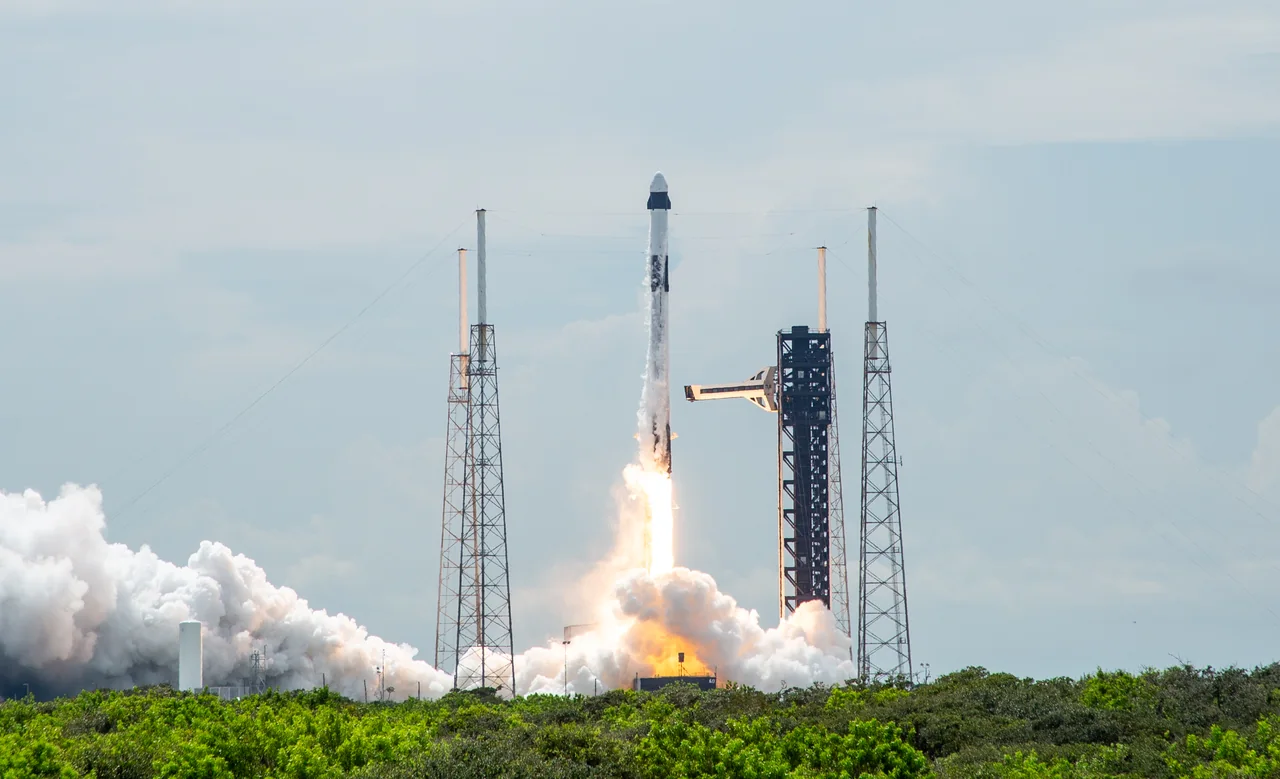
How to watch a rocket launch live
Find mission coverage, read the launch target correctly, and prepare for a delay without losing track of the mission.
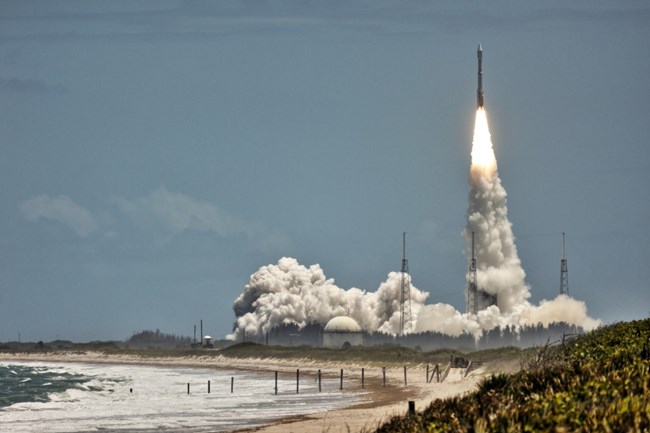
Where to watch a rocket launch in Florida
Compare Kennedy, Banana Creek, the Gantry, Playalinda and Jetty Park by launch pad, view and access. Includes place maps and a launch-day checklist.
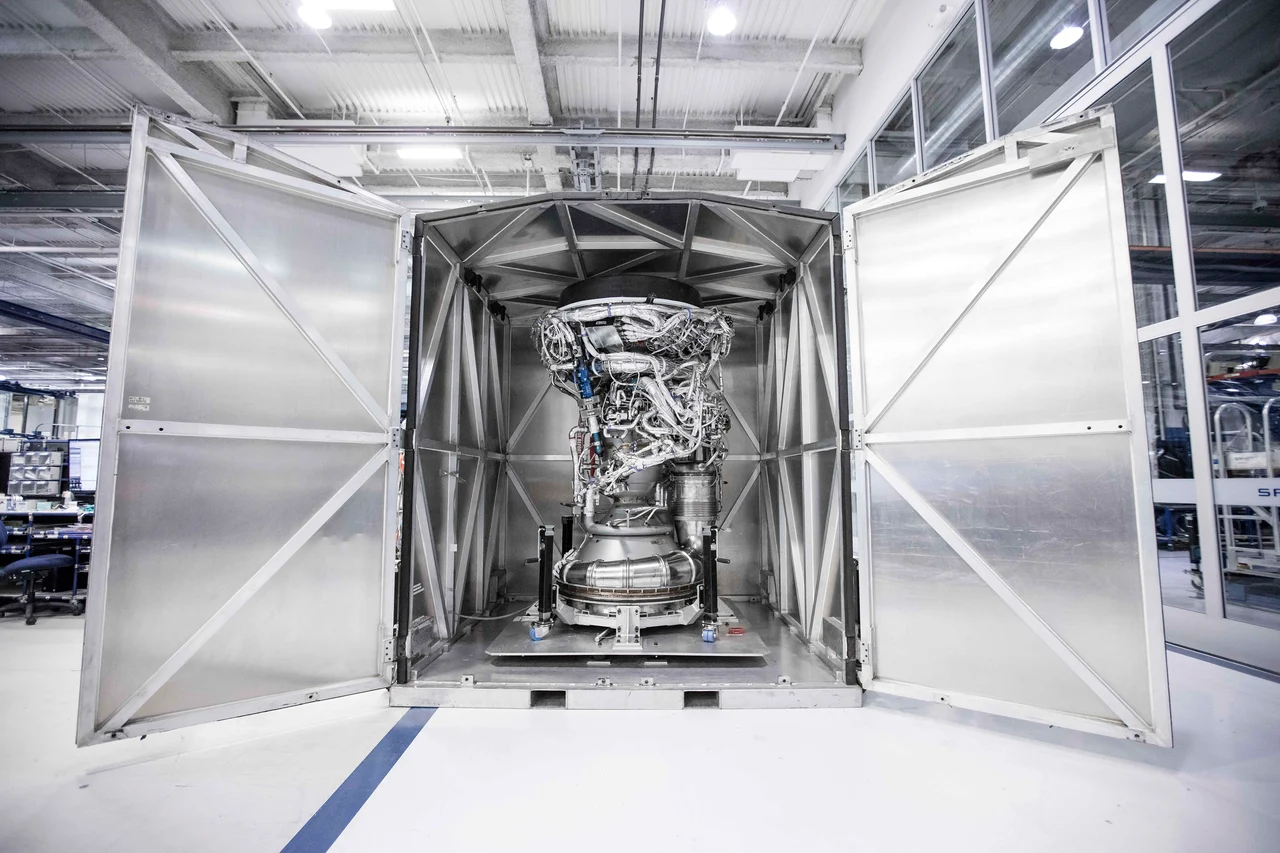
Rocket nozzles: why bigger works better in space
Merlin Vacuum wears an enormous bell. A first-stage engine cannot simply copy it. The reason is a pressure problem you can explore with a working ideal-flow model.